Hand Drawn Doodle Line Art Icon Set: When Imperfect Lines Add Authenticity to Visual Communication
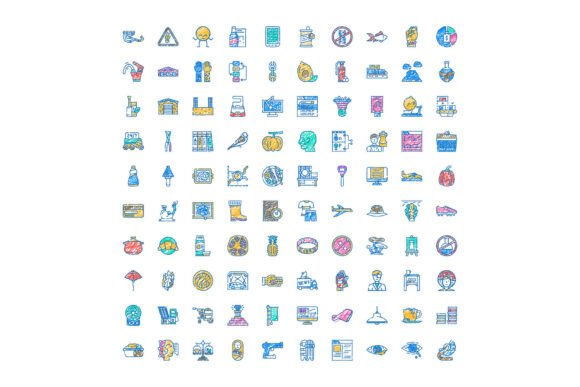
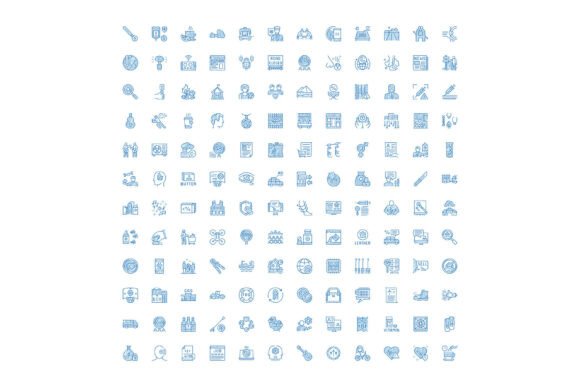
A Hand Drawn Doodle Line Art Icon Set is a curated collection of intentionally imperfect, sketch-style icons rendered in thin, expressive strokes—often with slight variations in line weight, subtle wobbles, and visible pencil-like texture. Unlike vector-flat or pixel-perfect icons, these are designed to evoke human authorship: think quick notations on a whiteboard, margin sketches in a planner, or annotations in a workshop handout. They’re typically delivered as scalable vector files (SVG, EPS) or high-resolution PNGs, making them usable across digital and print contexts without loss of fidelity.
What Sets This Style Apart From Other Icon Categories
The distinction isn’t just visual—it’s functional and psychological. While minimalist line icons prioritize clarity and scalability, and filled-color icon sets emphasize immediate recognition and brand consistency, the Hand Drawn Doodle Line Art Icon Set leans into approachability and narrative warmth. A “cloud” icon drawn with uneven loops and a slight tilt reads less like infrastructure and more like an idea forming mid-thought. A “lightbulb” sketched with visible pencil pressure suggests inspiration—not just electricity.
This contrasts meaningfully with other widely used icon approaches:
- Flat vector icons excel in UI interfaces where speed, consistency, and responsive scaling matter most—but can feel sterile in educational storytelling or internal team workshops.
- Isometric or 3D icons add depth and realism but often sacrifice legibility at small sizes and increase file complexity—making them less ideal for lightweight infographics or slide decks.
- Photographic or illustrated icons offer strong contextual cues but tend to be heavier in file size, harder to recolor, and less adaptable across varied background tones.
A Hand Drawn Doodle Line Art Icon Set occupies a middle ground: it retains the lightness and flexibility of line art while introducing tonal nuance that flat icons lack. It’s not about replacing precision—it’s about choosing the right register for the message.
Fitness for Purpose: Where These Icons Shine—and Where They Don’t
These icons perform best when the goal is engagement over efficiency. In infographics explaining complex processes—like how data flows from classroom surveys to district-level policy decisions—a doodle-style “survey form,” “database,” and “policy document” icon set helps soften abstraction. The slight irregularity signals that this isn’t corporate jargon; it’s a human-centered explanation.
Similarly, in internal training materials for educators or nonprofit staff, doodle icons reduce cognitive distance. A hand-drawn “collaboration” icon (two overlapping stick figures with connecting arrows) feels more inclusive than a symmetrical, abstract handshake glyph. That perceptual softening matters when audiences include people who don’t identify as “design-savvy” or “tech-native.”
But there are clear tradeoffs. Because each icon relies on expressive linework, scaling below 24px often blurs detail or loses character. They also require more thoughtful color application: a single-stroke icon doesn’t tolerate heavy gradients or complex shadows without compromising its handmade integrity. And unlike system icons tied to platform conventions (e.g., iOS’s trash can or Android’s back arrow), doodle icons carry no built-in user expectations—so they need supporting text or context to avoid ambiguity.
Real-World Use Cases and Practical Comparisons
Consider three common design scenarios:
- Educational Infographics for K–12 Teachers: A science unit on ecosystems might use a Hand Drawn Doodle Line Art Icon Set to depict “food chain,” “habitat,” and “pollination.” The organic linework mirrors how students sketch concepts in notebooks—reinforcing learning through visual continuity. Flat icons would work technically, but wouldn’t resonate as strongly with the pedagogical tone.
- Startup Pitch Decks: Early-stage teams often want to signal agility and authenticity. A doodle-style “user feedback loop” icon (a speech bubble feeding into a gear, then back to a person) subtly reinforces “we iterate fast, we listen closely”—without needing explicit copy. In contrast, sleek tech icons might unintentionally imply finished, unchangeable systems.
- Workshop Facilitation Guides: When designing a printable toolkit for community organizers, consistency across print runs matters. Doodle icons hold up well in grayscale photocopies and retain legibility at 72dpi—unlike detailed raster illustrations that pixelate or gradient-heavy SVGs that may render inconsistently across printers.
None of these examples make doodle icons “better” in absolute terms—they’re better for those specific communication goals.
Decision Factors: Is This the Right Choice for Your Project?
Ask yourself these questions before selecting a Hand Drawn Doodle Line Art Icon Set:
- Does your audience respond more readily to warmth than polish? If you’re designing for teachers, caregivers, grassroots advocates, or learners rebuilding confidence, hand-drawn cues often lower barriers to engagement.
- Is visual cohesion more important than strict uniformity? These sets intentionally vary stroke rhythm and endpoint taper—so if your project demands mathematical symmetry (e.g., a financial dashboard), another style will align more naturally.
- Do you need rapid, flexible recoloring? Most doodle icon sets support single-color fills, but layered effects (like dual-tone lines or textured overlays) may require manual editing in Illustrator or Figma. Test one icon in your intended workflow before licensing a full set.
- Will these appear alongside photography or highly detailed illustrations? Doodle icons can get visually lost next to rich imagery unless deliberately composited with ample whitespace or subtle drop shadows. They pair more predictably with clean sans-serif type and solid-color backgrounds.
Limits Worth Acknowledging
No icon style solves every problem. A Hand Drawn Doodle Line Art Icon Set won’t streamline developer handoff the way standardized icon fonts do. It won’t auto-scale in code-based design systems without additional SVG optimization. And because interpretation of “hand-drawn” varies—some sets lean toward cartoonish exaggeration, others toward restrained sketchiness—reviewing the full preview library matters more than relying on a homepage thumbnail.
Also consider accessibility: while line art itself isn’t inherently inaccessible, low-contrast strokes (e.g., light gray on off-white) or overly thin lines (<1px at standard size) can challenge users with low vision. Always test contrast ratios and ensure key icons remain legible when enlarged to 200%.
When to Look Elsewhere
A Hand Drawn Doodle Line Art Icon Set is unlikely to be optimal if your priority is:
- Building a reusable design system with strict token-based spacing, sizing, and naming conventions;
- Creating icons for public-facing government portals where neutrality and universal recognition outweigh stylistic personality;
- Designing for environments where download speed is critical (e.g., low-bandwidth regions), and you need ultra-lightweight, system-font fallback options;
- Need icons that integrate directly with screen reader labels via standardized ARIA roles—doodle icons usually require custom labeling anyway, but flat icon libraries often ship with pre-mapped accessibility metadata.
In those cases, evaluating scalable monoline or outline icon families—especially those built with accessibility-first constraints—may better serve long-term maintenance and inclusivity goals.
Making a Grounded Choice
Choosing a Hand Drawn Doodle Line Art Icon Set isn’t about chasing trendiness—it’s about matching visual language to intention. If your goal is to clarify, invite, and humanize—not just label and organize—then the slight imperfection of hand-drawn lines becomes a feature, not a compromise. But clarity still matters: ensure the set you choose includes consistent proportions across categories (business, technology, communication, education), offers sufficient coverage for your core topics, and provides documentation on recommended usage contexts.
Ultimately, the strongest icon choice emerges not from aesthetic preference alone, but from alignment with audience, medium, message, and maintenance reality. A Hand Drawn Doodle Line Art Icon Set earns its place when it makes complex ideas feel both accessible and authentically human—without asking the viewer to work harder to understand what they’re seeing.